Palm Jebel Ali 2026: Everything You Need to Know About Dubai's New Island
If you’re exploring Palm Jebel Ali for 2026, you’re likely weighing a few key questions: How does it compare to Palm Jumeirah? What’s actually confirmed so far? And does buying early make sense for your lifestyle or investment plans?

If you're tracking Palm Jebel Ali—Dubai's ambitious new Palm island project—you're likely weighing its investment potential against Palm Jumeirah's proven track record, trying to decode Nakheel's phased launch plans, and wondering when actual properties will hit the market. This 2026 guide brings together everything confirmed about this waterfront mega-project: the master plan, property types, expected timelines, investment considerations, and how Palm Jebel Ali properties compare to Dubai's established coastal developments.
Use this as your practical, decision-ready resource: what makes this new Palm island Dubai is building different from its predecessor, what infrastructure and amenities are planned, realistic completion expectations, and whether early investment positioning makes sense for your portfolio or lifestyle goals.
How this guide was researched
- Official sources first: We prioritized announcements from Nakheel (the master developer), Dubai Land Department registrations, and government infrastructure plans via Dubai Plan documentation.
- Historical context: Palm Jumeirah's 20-year development trajectory provides essential context for realistic timeline expectations and market absorption patterns.
- Infrastructure tracking: We cross-referenced transport plans, utility expansions, and zoning approvals to assess project feasibility beyond marketing renders.
- Market intelligence: Drawing on Primadom's developer relationship network and two decades of Dubai real estate experience, we separate confirmed plans from speculative projections.
What is Palm Jebel Ali? The basics
Palm Jebel Ali is Nakheel's long-planned third Palm island, significantly larger than Palm Jumeirah. Originally announced in the mid-2000s alongside Palm Deira, the project was shelved during the 2008 financial crisis and formally revived in 2023 as part of Dubai's renewed infrastructure push.
Key specifications (based on current master plan)
- Size: Approximately 50% larger than Palm Jumeirah's land area
- Location: Off Jebel Ali coast, between Dubai Marina and Abu Dhabi border
- Master developer: Nakheel (government-backed, developer of Palm Jumeirah, The Gardens, International City)
- Target completion: Phased development spanning 2026–2035+ (realistic multi-decade timeline based on Palm Jumeirah precedent)
- Planned components: Residential villas and apartments, luxury hotels and resorts, retail and entertainment districts, marina and yacht club, beach clubs and water sports facilities, educational and healthcare infrastructure
What makes it different from Palm Jumeirah
While Palm Jumeirah established the iconic palm-tree design and waterfront villa concept, Palm Jebel Ali aims to evolve the model with lessons learned from 20 years of operation:
- Larger land area: More space for amenities, green zones, and infrastructure—addressing Palm Jumeirah's density constraints
- Modern sustainability focus: Integration of renewable energy, water conservation, and green building standards aligned with UAE's 2050 net-zero targets
- Enhanced connectivity: Planned direct highway access and potential metro extension (versus Palm Jumeirah's monorail-only public transport)
- Mixed-use integration: Greater emphasis on live-work-play balance with commercial and employment zones, not purely residential resort living
- Contemporary architecture: While maintaining waterfront appeal, designs reflect 2020s aesthetics versus early-2000s Palm Jumeirah styles
Current status: where we are in 2026
As of early 2026, Palm Jebel Ali remains in early-stage development:
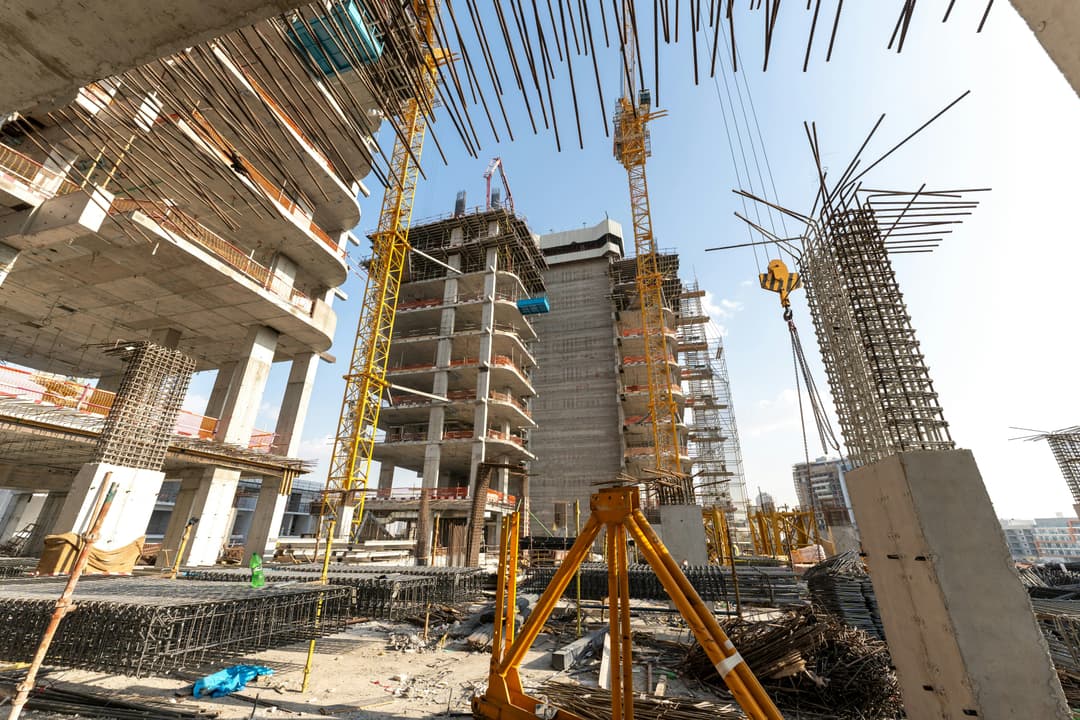
- Infrastructure preparation: Land reclamation and marine works are progressing; foundation phases underway for initial sections
- Master plan refinement: Nakheel continues finalizing detailed plans for phased releases—expect announcements throughout 2026
- Pre-launch interest: No public sales have launched; developers and brokers are positioning for expected late-2026 or 2027 initial releases
- Regulatory approvals: Project is registered with relevant authorities; check Dubai Land Department for official status updates
Bottom line for 2026: This is a long-term development story, not an immediate buying opportunity. Early positioning may offer advantages, but property availability and realistic timelines remain evolving.
Interested in waterfront opportunities?
While Palm Jebel Ali develops, Dubai offers established waterfront communities with immediate availability. Our expert team at Primadom can guide you through proven coastal investments and emerging opportunities.
Contact Primadom Real Estate:
Phone: +971 4 572 3628
Email: info@primadom.ae
Palm Jebel Ali master plan: what's confirmed
Nakheel's master plan for Palm Jebel Ali emphasizes the lessons learned from Palm Jumeirah's evolution, focusing on sustainability, connectivity, and community integration. Here's what's been confirmed through official channels:
Residential zones
- Frond villas: Similar to Palm Jumeirah's signature offering—waterfront villas with private beach access along palm fronds. Expected property types: 4–7 bedroom luxury villas with pools, boat moorings, and garden plots. Target market: high-net-worth families and investors seeking premium beach living.
- Trunk apartments: Mid-to-high-rise residential towers along the trunk (main spine), offering various unit sizes from studios to penthouses. Expected property types: 1–4 bedroom apartments with marina or sea views. Target market: professionals, smaller families, and buy-to-let investors seeking lower entry points than villas.
- Crescent developments: The outer crescent (protective barrier) will host mixed-use developments including hotels, serviced apartments, and luxury residences. Expected property types: hotel-branded residences, luxury apartments with resort amenities. Target market: lifestyle buyers and investors targeting short-term rental markets.
Commercial and retail districts
- Town center: Planned retail, dining, and entertainment hub at the trunk entrance—the community's commercial heart
- Marina district: Yacht club, waterfront restaurants, and marine services creating an active coastal lifestyle zone
- Beach clubs: Multiple beach club concepts (membership and day-pass models) providing social and recreational anchors
Amenities and infrastructure
- Educational facilities: International school campuses planned within the development (reduces commute for resident families)
- Healthcare: Medical centers and specialized clinics integrated into the community plan
- Parks and recreation: Cycling tracks, jogging paths, outdoor fitness stations, and landscaped parks exceeding Palm Jumeirah's green space ratio
- Water sports: Dedicated zones for kayaking, paddleboarding, jet skiing, and other marine activities
- Sustainability features: Solar integration, greywater recycling, EV charging infrastructure, and waste management systems targeting LEED community certification
Connectivity and access
- Highway access: Direct connection to Sheikh Mohammed Bin Zayed Road and potential future links to coastal highways
- Public transport: While not confirmed, feasibility studies for metro extension or dedicated bus rapid transit (BRT) routes are underway—addressing Palm Jumeirah's public transport limitations
- Internal mobility: A more robust internal transport system than Palm Jumeirah's monorail, potentially including autonomous shuttles and expanded water taxi networks
What's not yet confirmed
Important to note what remains in planning or speculation stages:
- Exact number of residential units and total population capacity
- Specific hotel brands and number of keys
- Detailed pricing structures and payment plans
- Phase-by-phase completion schedules beyond initial infrastructure
- Commercial tenant mix and retail square footage
- Public transport timeline and mode decisions
As master plan details firm up, we'll update this guide. For the latest confirmed information, consult Nakheel's official announcements and verify through Real Estate Regulatory Agency (RERA) registrations.
Palm Jebel Ali properties: what to expect
Based on Palm Jumeirah precedents, Nakheel's broader portfolio patterns, and confirmed master plan elements, here's what prospective buyers can anticipate when Palm Jebel Ali properties launch:
Frond villas: the premium tier
Expected specifications:
- Plot sizes: 10,000–20,000 sqft (larger than many Palm Jumeirah equivalents)
- Built-up area: 5,000–12,000 sqft
- Bedrooms: 4–7 bedrooms with en-suite bathrooms
- Features: Private beach frontage, swimming pools, boat moorings, landscaped gardens, maid's quarters, private parking (4–6 cars)
- Architectural styles: Contemporary Arabian, modern minimalist, Mediterranean-inspired—likely more diverse than Palm Jumeirah's initial offerings
Estimated price range (2026–2027 launches):
- Entry-level (4-bed, mid-frond): AED 15M–20M
- Premium (5–6 bed, prime frond position): AED 25M–40M
- Ultra-luxury (7+ bed, signature plots): AED 50M+
Investment considerations: Frond villas represent long-term capital appreciation plays rather than rental yield investments. Palm Jumeirah villas have delivered 100–150% appreciation over 15 years; early Palm Jebel Ali positioning could replicate this trajectory. However, substantial capital requirements and extended completion timelines (5–10 years for full community maturity) mean this suits patient, well-capitalized investors.
Trunk apartments: accessible waterfront entry
Expected specifications:
- Unit sizes: Studios (450–600 sqft), 1-bed (700–950 sqft), 2-bed (1,200–1,600 sqft), 3-bed (1,800–2,500 sqft), penthouses (3,000+ sqft)
- Tower heights: 15–40 floors (mix of mid-rise and high-rise)
- Features: Balconies with marina/sea views, shared amenities (pools, gyms, concierge), parking (1–2 spaces per unit), contemporary finishes
Estimated price range (initial releases):
- Studios: AED 800K–1.2M
- 1-bed: AED 1.2M–1.8M
- 2-bed: AED 2M–3.2M
- 3-bed: AED 3.5M–5.5M
- Penthouses: AED 8M+
Investment considerations: Apartments offer lower entry barriers and potential rental yields (estimated 4.5–6% once community matures). Comparable to Dubai Hills Estate or MBR City in positioning—premium waterfront with community amenities. Rental demand will depend on connectivity, school access, and employment hub proximity, all of which develop gradually.
Hotel-branded residences: lifestyle investment
Expected specifications:
- Unit types: Studios to 3-bed apartments with hotel services
- Services: Housekeeping, concierge, room service, hotel amenities access
- Rental programs: Optional guaranteed rental returns or hotel pool participation
- Brands: Likely partnerships with international luxury hotel groups (Marriott, Hilton, Accor, IHG) and regional operators (Rotana, Jumeirah)
Estimated price range:
- Premium to standard apartments (20–30% markup for hotel branding and services)
- Example: 1-bed hotel apartment AED 1.5M–2.2M vs standard 1-bed AED 1.2M–1.8M
Investment considerations: Attracts investors seeking passive income through hotel rental pools and management. Guaranteed returns (if offered) provide downside protection during ramp-up phases but often come with resale restrictions. Works well for overseas investors wanting hands-off Dubai exposure.
Payment plans: what to expect
Based on Nakheel's historical approach and current Dubai market norms, anticipated payment structures include:
- Off-plan villas: 60/40 to 70/30 plans (60–70% during construction, balance on handover); some premium plots may require 80/20 with higher initial deposits
- Apartments: 60/40, 50/50, or post-handover plans (20–40% paid over 2–5 years post-completion)
- Hotel residences: Varied based on brand and operator; may include deferred payment options tied to rental pool participation
- Down payments: Typically 10–20% on reservation for apartments, 20–30% for villas
Extended payment plans help manage cash flow during long construction timelines, but ensure you're comfortable with capital lock-up periods of 5–10+ years for early phases.
Development timeline: realistic expectations
Palm Jumeirah took approximately 20 years from announcement to full community maturity (2001 announcement, 2006 initial handovers, early 2020s full build-out). Palm Jebel Ali, being larger and more complex, will follow a similarly extended trajectory.
Phase 1 (2026–2030): Foundation and early releases
- 2026–2027: Continued infrastructure work; potential initial property launches (trunk apartments, select frond villas)
- 2027–2028: First handovers possible for expedited phases (likely apartments in accessible areas)
- 2028–2030: Expanded sales phases; early residents move in; community amenities (beach clubs, retail) begin opening
Phase 2 (2030–2035): Mid-development expansion
- 2030–2032: Additional fronds open for development; marina and commercial zones activate
- 2032–2035: Majority of residential zones under construction or completed; hotel openings accelerate; schools and healthcare facilities operational
Phase 3 (2035+): Maturity and final build-out
- 2035–2040: Crescent developments complete; full community infrastructure operational; transport links fully integrated
- Beyond 2040: Ongoing refinements, secondary developments, and community evolution (similar to how Palm Jumeirah continues adding hotels and amenities in its third decade)
Key takeaway: Early buyers should expect 5–10 year horizons before their specific unit hands over, and another 5–10 years for full community maturity. This isn't a quick flip opportunity; it's a long-term capital appreciation and lifestyle investment.
Looking for near-term opportunities?
If you need investment properties with shorter timelines, explore established communities like The Valley, Arabian Ranches 3, or Dubailand with 2026–2027 handovers.
Speak to our advisors: +971 4 572 3628 | info@primadom.ae
Investment case: should you buy into Palm Jebel Ali?
Whether Palm Jebel Ali makes sense for your portfolio depends on your investment horizon, risk tolerance, capital capacity, and alternative opportunities. Here's a balanced analysis:
The bull case: why early positioning could pay off
- Proven concept: Palm Jumeirah validated the artificial island model; properties there have delivered strong long-term appreciation (100–150% over 15–20 years for early buyers)
- Scarcity premium: Beachfront land in Dubai is finite; new coastal developments are increasingly rare, supporting long-term value
- Master developer confidence: Nakheel is government-backed with deep pockets and reputational stakes—project completion risk is lower than private developer mega-projects
- Dubai's growth trajectory: Population projections suggest continued demand for premium housing; Dubai's position as a global hub strengthens
- First-mover advantage: Early buyers often secure best plot selections, floor choices, and pre-construction pricing before market pricing adjusts upward
- Evolution improvements: Lessons from Palm Jumeirah (traffic, density, public transport) should result in better planning, enhancing livability and value retention
The bear case: risks and considerations
- Extended timelines: 5–10 year lock-up periods strain liquidity; opportunity cost of capital deployed elsewhere could be significant
- Construction risk: Even with Nakheel, mega-projects face delays; 2–3 year timeline extensions wouldn't be surprising
- Market cycle uncertainty: Dubai real estate is cyclical; 2026–2036 will include multiple boom-bust cycles—timing exit becomes crucial
- Rental yield delays: Rental income won't materialize until community matures (5–10 years); yields may underwhelm initially as infrastructure develops
- Competition from alternatives: Emaar Beachfront, Dubai Maritime City, and other coastal developments compete for the same buyer pool
- Price discovery unknown: Without sales launches, true pricing remains speculative; initial releases could surprise (upward or downward)
- Resale liquidity concerns: Reselling off-plan units during construction may be restricted or incur penalties; secondary market won't exist until handovers begin
Who should consider Palm Jebel Ali?
Good fit for:
- Ultra-high-net-worth investors with long time horizons (10+ years) seeking capital appreciation
- Families planning long-term Dubai residency who want to secure premium beachfront for eventual owner-occupation
- Portfolio diversifiers looking to add Dubai coastal real estate with patience for development cycles
- Investors who bought early into Palm Jumeirah and understand the long-game dynamics
Not ideal for:
- Investors needing near-term liquidity or rental income (2–5 year horizons)
- First-time Dubai investors unfamiliar with construction delays and market volatility
- Buyers unable to absorb potential 2–3 year timeline extensions financially and psychologically
- Investors seeking diversification across multiple properties rather than concentrated bets
Our investment advisory team can model Palm Jebel Ali scenarios against your specific portfolio goals, risk tolerance, and opportunity costs to determine fit.
How Palm Jebel Ali compares to other Dubai waterfront investments
To contextualize Palm Jebel Ali's positioning, here's how it stacks up against established and emerging coastal developments:
Palm Jumeirah: the proven benchmark
- Status: Fully developed and mature (20+ years old)
- Pricing: Villas AED 20M–100M+; apartments AED 1.5M–10M+ depending on location and luxury level
- Investment appeal: Established rental market (4–5% yields for apartments, 3–4% for villas); proven capital appreciation; strong resale liquidity
- Lifestyle: Active community, mature amenities, excellent connectivity (though traffic congestion and parking are persistent challenges)
- Verdict: Lower risk, lower upside compared to early Palm Jebel Ali positioning. Choose Palm Jumeirah for near-term certainty; Palm Jebel Ali for speculative long-term upside.
Emaar Beachfront: modern alternative
- Status: Under development; handovers ongoing (2024–2027 phases)
- Pricing: Apartments from AED 2M; penthouses AED 10M+
- Investment appeal: Shorter timelines than Palm Jebel Ali (2–5 years to handover); connection to Dubai Marina and JBR provides immediate lifestyle infrastructure
- Lifestyle: High-rise beach living with resort amenities; younger demographic than Palm Jumeirah
- Verdict: Mid-term compromise—more certainty than Palm Jebel Ali, more upside than fully mature areas. Good for investors wanting beach exposure without decade-long waits.
Bluewaters Island: compact luxury
- Status: Completed (opened 2018–2019)
- Pricing: Apartments AED 1.8M–8M+; penthouses significantly higher
- Investment appeal: Premium finishes and Ain Dubai (world's largest observation wheel) proximity; smaller scale than Palms creates exclusivity
- Lifestyle: Intimate island community with direct beach access and Marina walkability
- Verdict: Completed and ready, appealing to buyers wanting immediate enjoyment. Different scale and feel from Palm developments.
Dubai Maritime City / Dubai Harbour: emerging option
- Status: Under development; staggered handovers (2025–2028)
- Pricing: Wide range; apartments from AED 1.5M; villas AED 8M+
- Investment appeal: Yacht-centric lifestyle; mix of residential, commercial, and marine industries
- Lifestyle: Nautical theme; appeals to boating enthusiasts and younger professionals
- Verdict: Niche positioning; not direct competition to Palm Jebel Ali but offers alternative waterfront narrative.
Summary positioning: Palm Jebel Ali occupies the "next major chapter" in Dubai's coastal development story—higher risk and longer timelines than mature areas, but potential for outsized returns if execution matches Palm Jumeirah's success. It's a portfolio addition for those already established in Dubai real estate, not a first or only investment.
Nakheel as developer: track record and confidence
Understanding Nakheel's history is crucial for assessing Palm Jebel Ali's execution risk and timeline reliability.
Major developments (delivered)
- Palm Jumeirah (2001–2020s): Dubai's iconic artificial island; broadly successful despite some delays and 2008 crisis interruptions. Proven the concept commercially and operationally.
- The Gardens (2004–2012): Family villa community near Jebel Ali; strong occupancy and community satisfaction. Demonstrates Nakheel can deliver beyond mega-projects.
- International City (2002–2010s): Affordable housing complex; high occupancy but mixed reviews on quality and management. Shows Nakheel's range from budget to luxury segments.
- Ibn Battuta Mall (2005): Themed shopping center; successful retail destination supporting Nakheel's commercial competence.
- Jumeirah Village Circle (JVC) (2000s–2010s): Mid-market residential community; solid performance as family-friendly, value-oriented development.
Challenges and lessons
- 2008 financial crisis: Nakheel was heavily impacted; required government bailout and debt restructuring. Palm Deira was shelved permanently; Palm Jebel Ali paused for 15 years. Lesson: mega-projects are vulnerable to macro shocks.
- Construction delays: Historical pattern of 1–3 year delays on major phases. Lesson: always add buffer time to official timelines.
- Quality variability: Premium projects (Palm Jumeirah, newer phases of The Gardens) deliver well; budget projects sometimes see maintenance and finish concerns. Lesson: Nakheel performs best on flagship developments where reputation is at stake.
Strengths and confidence factors
- Government backing: As a government-linked entity, Nakheel has implicit support and is unlikely to abandon major projects
- Financial stability (post-restructuring): Balance sheet is healthier in 2020s than 2000s; more conservative financing approach
- Operational experience: 20+ years managing Palm Jumeirah provides institutional knowledge for Palm Jebel Ali
- Reputational stakes: Palm Jebel Ali's success or failure will define Nakheel's legacy; strong incentive to execute well
Bottom line on Nakheel: Strong confidence in project completion but expect timeline extensions and phased delivery. This is not a nimble private developer—it's a large government entity with bureaucratic processes. Patience is required, but abandonment risk is low.
For comparison with other developers in Dubai, Nakheel sits in the "master developer" tier alongside Emaar and Dubai Properties—large-scale, government-linked, with long track records.
Need help evaluating Palm Jebel Ali vs alternatives?
Primadom's portfolio management team provides comprehensive comparative analysis of Dubai's waterfront developments, helping you align investment choices with your goals, timeline, and risk tolerance.
Schedule a consultation: +971 4 572 3628 | info@primadom.ae
Location and connectivity: the Jebel Ali advantage and challenge
Palm Jebel Ali's location in the Jebel Ali area presents both strategic advantages and practical challenges compared to Palm Jumeirah's central positioning.
Geographic context
- Proximity to key areas:
- Dubai Marina: 15–20 minutes
- JBR / Bluewaters: 20 minutes
- Downtown Dubai: 35–40 minutes
- Dubai International Airport (DXB): 45–50 minutes
- Al Maktoum International Airport (DWC): 20 minutes
- Abu Dhabi: 40–50 minutes
- Employment hubs:
- Jebel Ali Free Zone (JAFZA): 10–15 minutes (major employer; 100,000+ workers)
- Dubai Marina / JLT office districts: 15–20 minutes
- Dubai Internet City / Media City: 20–25 minutes
Advantages of the location
- Western corridor growth: Dubai's expansion increasingly favors western areas (Expo City Dubai, Dubai South, Al Maktoum Airport expansion); Palm Jebel Ali positions well for this trajectory
- JAFZA proximity: Large employment base nearby supports rental demand from executives and professionals working in free zone
- Abu Dhabi commuters: Midway location between Dubai and Abu Dhabi could attract cross-emirate workers wanting coastal living with reasonable commutes to both cities
- Less congested (for now): Western Dubai has fewer traffic bottlenecks than central areas like Sheikh Zayed Road corridor
- Airport access: Al Maktoum International's planned expansion (targeting world's largest airport status by 2030s) could shift gravity westward, benefiting Palm Jebel Ali long-term
Challenges and considerations
- Distance from central Dubai: 35–40 minutes to Downtown/Business Bay during peak hours; less convenient for central employment or lifestyle
- Public transport gaps: No metro line currently serves Jebel Ali coast; residents will depend on cars unless/until Dubai Metro extends westward (Dubai Metro Red Line currently terminates at Jebel Ali station, several kilometers inland)
- Lifestyle amenity distance: Requires travel to Marina, JBR, or Downtown for major dining, entertainment, and cultural venues—unlike Palm Jumeirah's central positioning
- School commutes: Many top international schools cluster in central/eastern Dubai (Emirates Hills, Al Barsha, Umm Suqeim areas); families may face 30–45 minute school runs unless on-island schools materialize
- Perception challenge: Jebel Ali is historically associated with industrial zones; Nakheel must successfully rebrand the area as a premium residential destination
Infrastructure plans that could transform connectivity
- Dubai Metro western extension: Long-term plans (post-2030) include extending Red Line further west, potentially reaching Palm Jebel Ali area. If realized, this dramatically enhances accessibility and value.
- Coastal highway improvements: Upgrades to Sheikh Mohammed Bin Zayed Road and potential new coastal routes would reduce journey times to central Dubai
- Al Maktoum Airport activation: As the airport scales up operations (currently minimal), surrounding areas gain business travel convenience and employment opportunities
- Expo City Dubai integration: The former Expo 2020 site (now permanent Expo City Dubai) is 15 minutes from Palm Jebel Ali; its development as a business and innovation district could create local employment and lifestyle amenities
Connectivity verdict: Palm Jebel Ali's location is a calculated bet on western Dubai's future growth. Early buyers accept current connectivity challenges in exchange for potential upside as infrastructure develops. This isn't suitable for buyers needing immediate central Dubai access but works for those with long timelines and faith in westward urban expansion.
How to prepare for Palm Jebel Ali launches
Since official sales haven't begun as of early 2026, here's how to position yourself for initial releases:
Step 1: Register interest with Nakheel
- Visit Nakheel's official website or sales offices to join the interest list
- Provide contact information; you'll receive notifications about launch dates and exclusive pre-sale events
- Priority registration often grants early access to unit selection before public sales
Step 2: Work with established brokers
- Partner with agencies like Primadom that have direct developer relationships and allocation access
- Established brokers often receive pre-launch allocations or priority access for their clients
- Our experienced team can guide you through Nakheel's sales process and help negotiate optimal plot/unit selection
Step 3: Arrange financing pre-approval
- If planning to finance, secure mortgage pre-approval early (even though the property doesn't exist yet)
- Pre-approval confirms your borrowing capacity and strengthens your position during sales
- Our mortgage specialists can connect you with banks offering competitive off-plan financing
Step 4: Define your investment criteria
- Decide property type (villa vs apartment vs hotel residence)
- Set budget ranges (including buffers for price increases between pre-launch estimates and actual pricing)
- Determine priorities: view orientation (sea vs marina vs garden), floor level, frond position, proximity to amenities
- Clarify timeline tolerance (can you wait 5–10 years for handover?)
Step 5: Conduct due diligence
- Verify project registration with Dubai Land Department
- Review master plan documentation and confirmed infrastructure timelines
- Study Nakheel's Sale and Purchase Agreement (SPA) templates from other projects to understand standard terms
- Model payment schedules and ensure liquidity for construction-linked installments over 5–10 years
Step 6: Visit show homes and sales galleries
- Once Nakheel opens sales galleries (expected late 2026 or 2027), tour show homes and review detailed plans
- Compare finishes, layouts, and specifications across property types
- Ask about customization options, payment plan variations, and resale/transfer restrictions during construction
Step 7: Reserve and secure your unit
- Be ready to move quickly—prime plots and floors will go fast during initial launches
- Pay reservation fee (typically AED 10,000–50,000 depending on property value)
- Submit required documents (passport, Emirates ID, visa, proof of funds/pre-approval)
- Sign reservation agreement and pay down payment (10–30% depending on structure)
Step 8: Complete registration and begin payments
- Sign Sale and Purchase Agreement (SPA) with Nakheel
- Register SPA with Dubai Land Department (you'll pay 4% DLD transfer fee, typically split: 2% on purchase, 2% on handover for off-plan)
- Set up payment reminders for construction-linked installments per your schedule
- All payments go to RERA-registered escrow account—never directly to developer's operating account
Primadom provides end-to-end support throughout this process, from pre-launch positioning through handover and beyond. Our after-sales team ensures smooth snagging, defect resolution, and community integration once you receive keys.
Want to be first in line for Palm Jebel Ali launches?
Register your interest with Primadom today. We'll notify you immediately when Nakheel announces sales dates and provide priority access to our developer allocations.
Contact us now: +971 4 572 3628 | info@primadom.ae
Explore our comprehensive services: Marketing Solutions | Property Management
Alternative investments while waiting for Palm Jebel Ali
Given Palm Jebel Ali's extended timeline, consider these established Dubai communities offering near-term opportunities:
For beachfront luxury (immediate availability)
- Palm Jumeirah: Mature market, proven appreciation, active community. Villas and apartments available now.
- Bluewaters Island: Completed, modern finishes, Ain Dubai proximity. Apartments from AED 1.8M.
- Emaar Beachfront: Near-term handovers (2025–2027), contemporary high-rises, Marina connectivity. Off-plan and resales available.
For family villa communities (2026–2028 handovers)
- The Valley: Affordable Emaar villas, nature-focused, strong rental demand. From AED 1.4M.
- Arabian Ranches 3: Established community brand, golf and polo club access. From AED 2.1M.
- Dubailand corridor: Budget-friendly options (Villanova, Mudon, Serena), metro expansion upside. From AED 950K.
For premium apartments with amenities
- Dubai Hills Estate: Golf course living, top schools, Dubai Hills Mall. Apartments from AED 1.2M.
- MBR City: Lagoon access, Downtown views, mixed-use integration. From AED 1.5M.
- Jumeirah Golf Estates: Championship golf, luxury villas and apartments, exclusive community. From AED 2.5M.
These alternatives offer shorter timelines (1–3 years to handover or immediate possession), proven communities, and active rental markets—allowing you to generate returns while waiting for Palm Jebel Ali opportunities to materialize.
Our investment advisory team can model scenarios comparing early Palm Jebel Ali positioning against near-term investments in established areas, helping you optimize portfolio allocation and timelines.
Quick FAQs: Palm Jebel Ali 2026
-
When will Palm Jebel Ali properties go on sale?
No official date announced as of early 2026. Expect late 2026 or 2027 for initial releases based on infrastructure progress and Nakheel’s typical sales timelines.
-
How much will Palm Jebel Ali villas cost?
Estimated AED 15M–50M+ depending on size, position, and luxury level. Apartments likely AED 800K–5M+. Official pricing TBD.
-
When will I get the keys if I buy now?
First handovers realistically 2028–2030+ for expedited phases; most units 2030–2035. Add a 2–3 year buffer for potential delays.
-
Can foreigners buy on Palm Jebel Ali?
Yes, it’s a freehold development. Foreign buyers have full ownership rights, the same as UAE nationals.
-
Is Palm Jebel Ali registered with RERA?
The project is registered; verify specific phase registrations via Dubai Land Department when sales launch.
Bottom line: Palm Jebel Ali in perspective
Palm Jebel Ali represents Dubai's next chapter in waterfront living—a bold bet on western corridor growth, sustainability-focused design, and the proven appeal of Palm-branded coastal communities. For the right investor or homebuyer, early positioning could deliver substantial long-term returns, replicating Palm Jumeirah's appreciation trajectory for those who bought in the 2000s.
But this isn't a quick win or low-risk opportunity. It demands patient capital, tolerance for 5–10 year timelines (or longer), acceptance of construction delays and market cycles, and faith in Nakheel's execution and Dubai's westward expansion. The project's success hinges on infrastructure development, connectivity improvements, and community activation—none of which are guaranteed to unfold on optimistic schedules.
If you're drawn to the idea of owning a piece of Dubai's newest artificial island, approach with eyes wide open: diversify with near-term investments in established areas, model worst-case scenarios (3-year delays, 20% cost overruns, lukewarm initial rental demand), maintain liquidity for extended payment schedules, and treat Palm Jebel Ali as a portfolio addition rather than a sole investment.
For many investors, the wiser move in 2026 is watching Palm Jebel Ali's development from the sidelines while deploying capital into proven communities like Dubai Hills Estate, The Valley, or established Palm Jumeirah—then reassessing Palm Jebel Ali in 2028–2030 when handover timelines clarify and community activation begins.
But for those with the right profile—ultra-long horizons, substantial capital, Dubai growth conviction, and appetite for calculated speculation—Palm Jebel Ali offers the potential to participate in a landmark project that could define Dubai's next decades of coastal development.
The opportunity is real. The timeline is long. The decision is yours.
At Primadom Real Estate, we provide independent, expert guidance on Palm Jebel Ali and all Dubai property opportunities—helping you align investments with your goals, timelines, and risk tolerance. Whether you're ready to position early for Palm Jebel Ali or exploring proven alternatives, our team delivers comprehensive support from market intelligence through handover and beyond.
Contact Primadom Real Estate
Phone: +971 4 572 3628
Email: info@primadom.ae
Website: www.primadom.ae
Explore our services: Investment Advisory | Mortgage Assistance | Portfolio Management | Property Management | Marketing Solutions | After-Sales Support
Stay informed: Visit our blog for Dubai real estate insights, investment guides, and market updates.