Etihad Rail UAE: The Complete Guide to the National Railway Network
Etihad Rail UAE guide to routes, freight, passengers, GCC rail and economic impact.
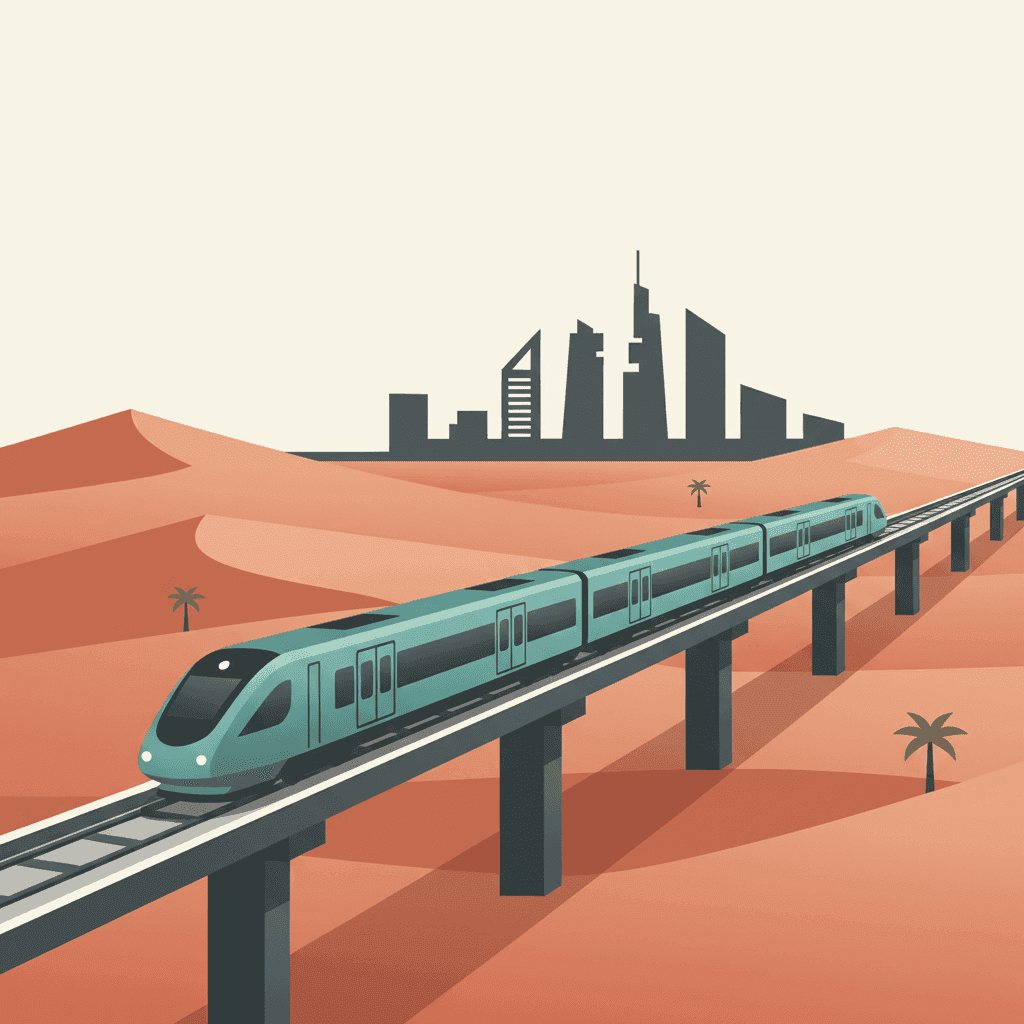
If you live in the UAE or you’re planning to invest, work, or travel here in the next few years, you’re going to hear a lot more about Etihad Rail. This is not just “a new train.” It’s the backbone of the UAE’s future transport system — a national railway network tying together cities, ports, industrial zones, and eventually neighbouring GCC countries.
In this guide, you’ll get a clear, practical overview of what Etihad Rail is, how the network is being rolled out, what it means for passengers and freight, and why it matters for the economy, real estate, tourism, and everyday life in the UAE.
What is Etihad Rail in the UAE?
Etihad Rail is the UAE’s national rail project and operating company. Its role is to design, build, and run a modern passenger and freight railway system across the country, with connections to the wider Gulf Cooperation Council (GCC) railway network.
Key points to understand:
- Total planned investment of around Dh50 billion.
- Projected to unlock about Dh200 billion in economic benefits over 50 years.
- Built to international safety and efficiency standards, with high-capacity tracks, modern signalling, and integrated logistics hubs.
- Designed as both a freight rail network and a national passenger train system.
Etihad Rail is also one of the UAE’s flagship “Projects of the 50” — long-term strategic initiatives to support sustainable development, diversification, and global competitiveness.
UAE National Railway Network: How the Etihad Rail Network Is Laid Out
The Etihad Rail network effectively acts as a spine across the UAE, connecting major emirates and key economic zones. When you think of the UAE railway project, think of it as three overlapping layers:
- Urban and population centres – Abu Dhabi, Dubai, Sharjah, Ras Al Khaimah, Fujairah, and key towns in between.
- Industrial and logistics hubs – industrial zones, manufacturing clusters, and major distribution centres.
- Ports and border points – such as Khalifa Port, Fujairah Terminals, and future links to Oman and the wider GCC.
This integrated transport network is designed to:
- Reduce reliance on highways for both people and goods.
- Cut travel time between emirates, especially on long intercity routes.
- Link ports directly to inland cities and factories via rail freight.
- Prepare the UAE for seamless multi-modal transport (metro, tram, buses, taxis, and rail working together).
Part of a Bigger Picture: Etihad Rail and the GCC Railway Network
Etihad Rail is not just about moving within the UAE; it’s also a crucial segment of the future GCC railway that will connect Gulf countries via a continuous regional rail corridor.
Within that bigger picture, the UAE’s role is to provide:
- A federal railway network that links to Saudi Arabia and Oman.
- Rail access for Gulf cargo to key UAE ports and industrial zones.
- Potential future cross-border passenger services as regional agreements and infrastructure mature.
This is why you often see Etihad Rail described as a strategic asset for regional trade and economic integration, not just a domestic transport solution.
Etihad Rail Freight Services: The Backbone That’s Already Operational
Long before you board a passenger train, Etihad Rail’s commercial freight services are already reshaping how goods move across the UAE.
Freight Network Status
The freight rail network is complete and operational across the country. This means:
- The main cargo corridors are laid and in use.
- Rail links already connect ports, industrial zones, and logistics hubs.
- Freight trains are hauling bulk commodities and containers, taking pressure off roads.
Why Rail Freight Matters for the UAE Economy
Each Etihad Rail freight train removes up to 300 trucks from UAE highways. That has direct and indirect benefits:
- Lower congestion on main routes used by residents and tourists.
- Fewer road accidents involving heavy trucks.
- Less wear and tear on roads (and therefore lower maintenance costs).
- Reduced emissions per tonne-kilometre compared to road freight.
For businesses using the rail cargo network, this translates into:
- More predictable delivery times and fewer delays.
- Better supply chain efficiency and asset utilisation.
- Potentially lower long-term logistics costs versus exclusive reliance on trucking.
Etihad Rail Passenger Network: Routes, Timings, and Travel Experience
The part that will change daily life for residents is the Etihad Rail passenger service, scheduled to begin operations around 2026.
Coverage: Cities and Regions Connected
Once fully rolled out, the UAE national passenger train network will connect 11 cities and regions from west to east, including:
- Al Sila in the far west of Abu Dhabi emirate
- Central urban hubs like Abu Dhabi and Dubai
- Other key emirates and cities such as Sharjah, Ras Al Khaimah, and Fujairah
The trains are designed to run at speeds of up to 200 km/h, carrying an estimated 36 million passengers annually by 2030.
Expected Travel Times Between Emirates
The goal is not just comfort, but competitive journey times compared to driving. Indicative timings include:
- Abu Dhabi – Dubai: approximately 57 minutes.
- Abu Dhabi – Fujairah: about 105 minutes.
These are particularly attractive when you consider peak-hour congestion, accidents, and weekend traffic on key highways. With rail, your travel time becomes predictable — you can work, read, rest, or simply enjoy the journey instead of watching brake lights.
High-Level Public Support and Test Rides
A highly publicised moment in the project’s rollout was when His Highness Sheikh Mohammed bin Rashid Al Maktoum took an Etihad Rail passenger train from Dubai to Fujairah to inspect progress. That test ride sent a clear signal domestically and internationally: the UAE is serious about public rail transport as part of its long-term mobility strategy.
Economic Impact: How Etihad Rail Fuels Growth, Jobs, and Investment
Viewed purely as infrastructure, Etihad Rail is a Dh50 billion project. But as part of the National Railways Programme, it’s also a powerful tool for economic transformation.
Dh200 Billion in Projected Economic Gains
Over a 50-year horizon, the UAE national train network is expected to generate around Dh200 billion in benefits, broken down roughly as:
- Dh100 billion from reduced transport costs and shorter travel times.
- Dh22 billion from fewer road accidents and associated losses.
- Dh23 billion through better land access and more efficient urban planning.
- Dh8 billion in lower road maintenance costs.
All of this supports the UAE’s broader goals of economic diversification and resilience beyond oil.
Boost to Trade, Logistics, and Supply Chains
For the private sector, Etihad Rail opens up an entirely new layer of logistics solutions:
- Direct port-to-hinterland connections for containers and bulk goods.
- Reduced dependence on long-haul trucking for heavy and recurring flows.
- Improved ability to plan inventory and production due to reliable timetabled rail services.
In practical terms, this makes the UAE even more attractive as a base for manufacturing, distribution, and regional trade, because the underlying national rail infrastructure supports efficient movement of goods across the country and beyond.
Domestic Tourism and Lifestyle: Making the UAE Easier to Explore
The Etihad Rail passenger network is also expected to significantly boost domestic tourism and weekend travel.
When you can move between emirates quickly and comfortably without driving, you’re more likely to:
- Take spontaneous weekend trips to another emirate.
- Visit mountain regions and east-coast destinations that currently feel “far” by car.
- Explore cultural sites, beaches, and nature reserves in different parts of the UAE.
Officials estimate rail connectivity could contribute up to Dh24 billion in tourism-related revenue over 50 years. For hospitality, retail, and entertainment sectors, a fast, reliable national train system is a powerful demand driver.
Sustainability and Safety: A Greener, Safer Transport Backbone
One of the strongest arguments for a federal rail network is its environmental and safety performance compared with road transport.
Emissions Reduction and Green Mobility
By shifting a significant share of freight and some intercity travel from road to rail, Etihad Rail is projected to help achieve:
- A 21% reduction in land transport emissions annually by 2050.
- An emissions saving equivalent to around 8.2 million tonnes of CO₂ per year.
That makes the network a central pillar of the UAE’s push for low‑carbon, sustainable transport infrastructure, advancing national climate commitments while still supporting growth.
Road Safety and Reduced Congestion
Every freight train that replaces up to 300 trucks on highways also reduces the risk of major accidents and heavy-vehicle collisions. Fewer trucks and, over time, fewer long-haul car journeys mean:
- Safer roads for everyone.
- Less congestion in and between cities.
- Lower road maintenance requirements as surfaces face less heavy load stress.
For passengers, rail also provides an important alternative during adverse weather, fog, or peak holiday traffic, when roads become more hazardous.
UAE–Oman Rail Link: The Joint Venture With Oman Rail
One of the most important cross-border elements of Etihad Rail is its joint venture with Oman Rail, which will extend the UAE network into the Sultanate of Oman.
Connecting to Sohar Port
The first phase of this cooperation focuses on building and operating a railway line linking the UAE National Railway Network to Sohar Port in Oman. This link will:
- Integrate Sohar Port into the Gulf’s emerging rail-enabled logistics ecosystem.
- Offer new options for import–export flows via Omani and UAE ports.
- Deepen the strategic and historic relationship between the two countries.
Role in the Wider GCC Rail Vision
Combined with potential links to Saudi Arabia and other GCC states, the UAE–Oman line is part of a longer-term plan to create a continuous GCC railway network. That would unlock:
- Faster, more efficient overland trade across the Gulf.
- New tourism itineraries that combine multiple Gulf destinations by train.
- Additional resilience in regional supply chains alongside maritime routes.
Innovation, Customs Corridors, and Strategic Governance
Etihad Rail is positioned not just as a national train operator, but as an innovation platform in rail mobility.
Global Rail 2025 and Future Mobility
Through events such as Global Rail 2025, Etihad Rail showcases how the UAE plans to:
- Adopt advanced rail technologies, signalling, and operations.
- Integrate digital systems for asset management and logistics planning.
- Set regional benchmarks for modern, sustainable rail infrastructure.
Customs Corridor Project
An example of this integrated thinking is the proposed Customs Corridor Project, which will:
- Link Khalifa Port with Fujairah Terminals.
- Streamline customs and regulatory processes for cargo moving between these gateways.
- Reduce clearance times and paperwork, making rail even more competitive for port-to-port and port-to-hinterland movements.
These initiatives show that Etihad Rail is being developed as part of a holistic logistics and transport strategy, not just as tracks and trains.
Etihad Rail and the UAE’s “Projects of the 50” Vision
Being formally included within the UAE’s “Projects of the 50” gives Etihad Rail a special status:
- It’s identified as a national priority for the next phase of development.
- It supports long-term goals like economic diversification, sustainable infrastructure, and higher global competitiveness.
- It enjoys clear political backing and visibility at the highest levels of leadership.
In other words, Etihad Rail is a central part of how the UAE intends to write its next economic chapter.
Jobs, Skills, and Careers: Building a New Rail Industry in the UAE
Alongside tracks and stations, Etihad Rail is building a new skills ecosystem in the UAE.
The company actively promotes Etihad Rail careers and invites talent to “join our team and be a part of the UAE National Railway Network.” This includes roles in:
- Engineering and construction – track, bridges, tunnels, signalling, power.
- Operations and maintenance – drivers, controllers, maintenance technicians.
- Logistics and planning – freight scheduling, capacity planning, supply chain integration.
- Technology and innovation – digital systems, automation, data analytics.
- Customer-facing roles – passenger services, station operations, safety and security.
For Emiratis and residents alike, this opens up an entirely new sector of employment and career development anchored in a long-term national project.
Media Centre, Maps, and Staying Updated on Etihad Rail UAE
Because Etihad Rail is rolling out in phases, details on passenger station locations, timings, schedules, and ticketing will continue to evolve.
To stay up to date, you can:
- Visit the official Etihad Rail Media Centre for maps, latest news, and resources.
- Follow Etihad Rail’s official social media channels for construction milestones, test runs, and service announcements.
- Watch for government and media coverage on new agreements, freight corridors, and passenger service timelines.
As the network approaches full passenger operations, you can expect more detailed public information on routes, fares, travel classes, and connections to other public transport within each emirate.
Why Etihad Rail Matters for You and for the UAE
Whether you look at it from the perspective of a resident, investor, business owner, or policy watcher, Etihad Rail is one of the most consequential infrastructure projects in the UAE’s modern history.
- For mobility: It brings a fast, predictable intercity passenger train option, complementing metros, trams, and buses.
- For business and trade: It creates a freight rail backbone that makes supply chains more efficient and cost-effective.
- For the environment and safety: It takes cars and trucks off the roads, cutting emissions, accidents, and congestion.
- For the wider region: It anchors the UAE within the emerging GCC railway network and the UAE–Oman rail link to Sohar Port.
- For the national vision: It embodies the UAE’s ambition to build a connected, sustainable, and diversified future economy.
As the network moves from freight-only to full passenger operations, Etihad Rail will gradually shift from being a headline in the news to something you use, see, and feel in daily life — whether that’s shaving an hour off your trip between cities, opening up a new logistics strategy for your business, or simply making it easier for people to live in one emirate and work in another.
Our Blog
UAE Cities Guide: Major Hubs, Northern Emirates, and Hidden Urban Gems

Burj Khalifa Properties: How to Buy, Live and Invest in the World’s Tallest Tower

Marsana Beach Abu Dhabi: Your Complete Guide to Hudayriyat’s Waterfront Destination
Nurai Island Abu Dhabi Guide: How to Get There, Stay, Invest & Make the Most of It