Renting a Warehouse in Dubai: The Only Practical Guide You Really Need
Complete guide to renting a warehouse in Dubai: costs, best areas, types, legal steps.
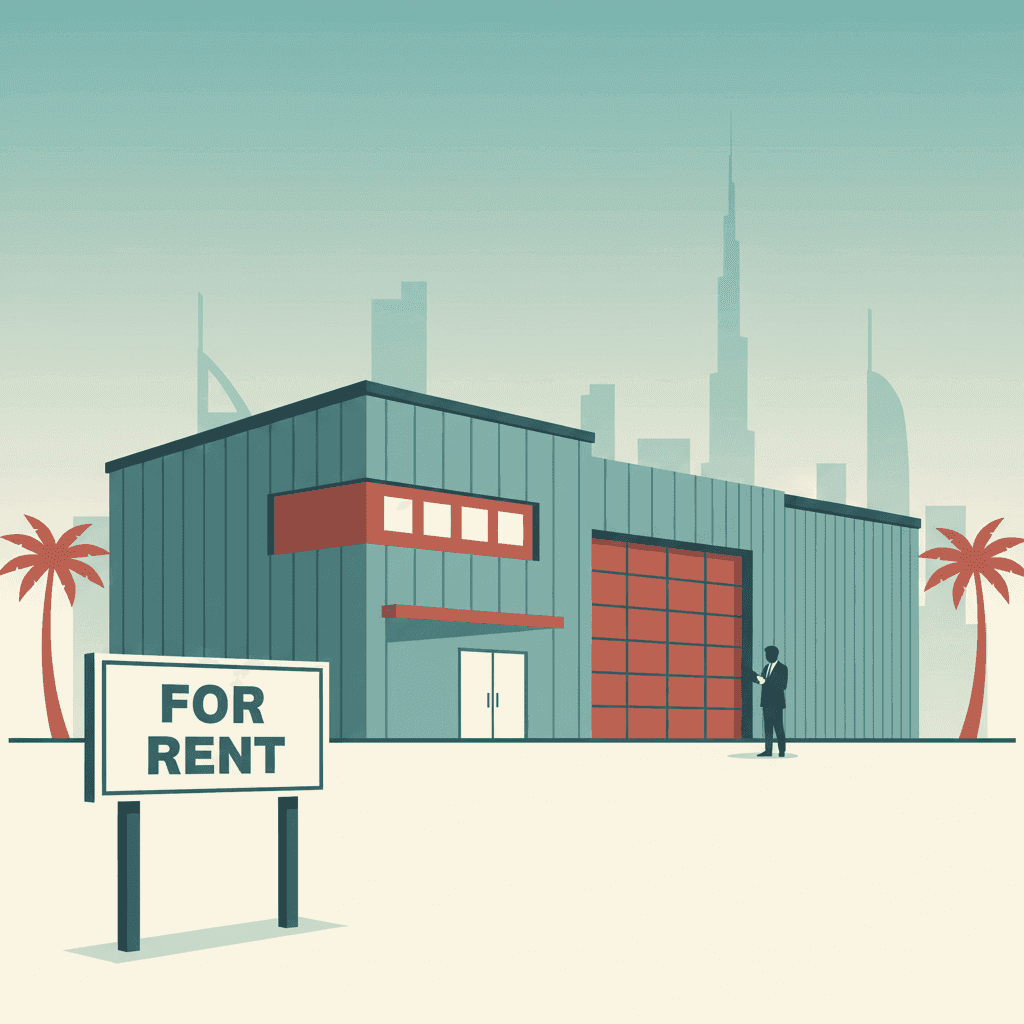
If you’re thinking about renting a warehouse in Dubai, you’re not alone. Between port‑driven logistics, exploding e‑commerce, and steady demand for storage and light manufacturing, the market for industrial warehouse space in Dubai is incredibly active.
This guide walks you through everything you need to know: warehouse types, the best industrial areas, average prices, legal requirements, and a step‑by‑step process to actually lease a warehouse for your business. Whether you’re a startup hunting for a small, affordable unit or an established company looking for a grade‑A logistics facility near Jebel Ali, you’ll be able to map out your options clearly.
Dubai Warehouse Rental Market Overview
Dubai is one of the Middle East’s key logistics and light‑industrial hubs. When you rent a warehouse in Dubai, you’re buying into a location that’s built around trade:
- Strategic location between Europe, Asia and Africa, with direct access to Jebel Ali Port, Dubai International Airport (DXB) and Al Maktoum International Airport (DWC).
- Purpose‑built industrial zones like Jebel Ali Free Zone (JAFZA), Dubai South, Dubai Investment Park (DIP), Al Quoz, Ras Al Khor and Dubai Industrial City (DIC).
- Pro‑business regulations, with a choice between mainland licensing and free zone company setup, plus well‑defined rules for commercial warehouse leases.
- Huge variety of stock – from small warehouse units for rent in central locations to high‑power industrial warehouses and cold storage facilities in logistics parks.
Because warehouse rents are generally cheaper per square foot than offices or showrooms, a lot of companies use a warehouse as their operational base, storage hub and sometimes even back‑office combined.
Average Warehouse Rental Prices and Sizes in Dubai
When you start looking at warehouses for rent in Dubai on portals like Bayut or Property Finder, you’ll see a wide range of asking prices. Here’s how to read the market realistically:
- Entry‑level rents: from around AED 4,900 per month for small, basic storage units in secondary locations.
- Average monthly rent: around AED 49,000, depending on area, size and specs.
- Yearly leases: roughly AED 15,000 – 1,000,000+ per year across the market, with top‑tier logistics facilities easily hitting AED 1.46m per year or more.
- Typical sizes:
- Small warehouses: ±2,500–5,000 sq. ft.
- Common mid‑size units: ~8,500 sq. ft. on average.
- Logistics / industrial units: 10,000–30,000+ sq. ft.
- Large facilities: up to 60,000–66,000 sq. ft. and beyond.
- Power capacity:
- Standard free zone units in places like JAFZA: ~10–127 kW.
- Heavy industrial / cold storage: 160 kW, 400 kW, 700 kW or multi‑MVA (2,500–4,000+ kVA).
Expect to pay more for a commercial warehouse for rent in Dubai that’s either very central (like Al Quoz) or extremely high‑spec (grade‑A logistics near port/airport with multiple loading bays, sprinkler systems and high power).
Why Rent a Warehouse in Dubai Instead of Buying?
For most businesses, renting a warehouse in Dubai is more practical than buying an industrial property outright. You get:
- Lower upfront cost – no massive capital tie‑up, just rent and deposits.
- Flexibility – you can scale from a small warehouse for rent in Dubai to a larger logistics facility as volumes grow.
- Speed – many warehouses are ready‑to‑move‑in, with existing power, loading bays and sometimes office fit‑out.
- Location choice – you can test an area (Al Quoz vs DIP vs Jebel Ali) without long‑term ownership commitment.
If you’re new to the city or testing a new business model (e‑commerce, 3PL, light manufacturing), leasing an industrial warehouse for rent in Dubai gives you the breathing room to adjust your footprint after 12–24 months.
Types of Warehouses for Rent in Dubai
Not all Dubai warehouses are created equal. Understanding the main categories will help you filter listings intelligently and avoid overpaying for specs you don’t need.
Small Warehouse for Rent in Dubai (Startups & SMEs)
These are the “starter units” of the industrial world – perfect if you’re launching or consolidating operations.
- Size typically 2,000–5,000 sq. ft., sometimes less.
- Basic but functional height for light racking.
- Simple truck access (not always docked loading bays).
- Often with a small office or admin room, or space to add a mezzanine.
- Common locations: Al Quoz, Al Qusais, Ras Al Khor, DIP and other established industrial strips.
If you’re an online store, a local distributor or a service company needing storage plus a mini workshop, a small warehouse for rent in Dubai keeps your overhead manageable while giving you room to grow.
Standard Commercial & Logistics Warehouses
These are the workhorses of the Dubai warehouse rental market, ideal for logistics companies, import/export traders and light manufacturers.
- Built‑up areas from 10,000–60,000+ sq. ft.
- Higher eaves height (often 7m+), suitable for pallet racking.
- Floor load capacity around 5 tons per sq. m in many logistics parks.
- On‑grade loading, ramps or multiple loading bays / docks.
- Integrated office block (ground + mezzanine or multi‑storey) with toilets and pantry.
- Dedicated parking and truck circulation yards.
When you see terms like “open‑plan industrial warehouse”, “warehouse with office for rent in Dubai” or “standalone warehouse with yard”, you’re usually in this category.
High‑Spec Grade A Logistics Facilities
If you’re running a high‑volume operation – regional distribution, e‑commerce fulfilment, 3PL – you’ll be drawn to grade A warehouse space for rent in Dubai’s top logistics hubs.
- Modern construction with 10–12m clear height.
- Multiple dock levellers and loading bays (often 8, 10, 20+ docks).
- High‑spec flooring, designed for heavy forklifts and dense pallet storage.
- Advanced fire‑fighting and sprinkler systems, fully compliant with Dubai Civil Defence.
- Large three‑phase power capacity (hundreds of kW to multi‑MVA).
- Options for subdivision: one large building can be split into several warehouse units for lease.
These are usually marketed as “premium industrial warehouse for lease”, “logistics facility with 8 loading bays”, or “brand new grade A warehouse in Dubai South / JAFZA / DIP”. Expect higher rent, but also much better operational efficiency.
Light Industrial Units (LIUs)
Light Industrial Units are common in free zones like JAFZA and some mainland industrial communities.
- Typical area: 313–619 sq. m (~3,370–6,665 sq. ft.).
- Power: roughly 10–74 kW depending on unit type.
- Designed for storage + light assembly, packaging, value‑added services.
- Usually come with small built‑in offices and basic staff facilities.
They’re perfect if you’ve outgrown basic storage but don’t need a full‑scale industrial warehouse yet.
Industrial Warehouses for Manufacturing
These are for more serious industrial activity – assembly lines, heavy machinery, workshops.
- Starting from around 543 sq. m (~5,845 sq. ft.) and going up substantially.
- Designed for higher power loads, heavy floor loading and specific industrial zoning.
- More common in JAFZA, Dubai Industrial City, Ras Al Khor Industrial, DIP and similar zones.
Listings may emphasise “high power warehouse (700 kW / 2500kVA)”, “industrial warehouse with 5T/sq. m floor load”, “warehouse with cranes” etc. Always match these specs to your actual machinery and process.
Cold Storage Warehouses
Cold storage warehouse space for rent in Dubai is a specialised niche, critical for food, livestock, agriculture, pharma and healthcare.
- Multiple temperature‑controlled chambers, sometimes fully racked.
- Heavy insulation and specialised flooring and drainage.
- Significant dedicated power for refrigeration systems.
- Strict fire‑safety, hygiene and sometimes food authority regulations.
These units cost more to rent and to run, but if you’re in F&B or pharma distribution, they’re non‑negotiable.
Showroom + Warehouse Combinations
Many businesses need visibility plus storage – think automotive, building materials, furniture, tiles, electronics.
- Road‑facing glass showroom front.
- Warehouse behind or attached, often with loading access from the rear.
- Office space on mezzanine or upper floors.
If you see “showroom with dedicated warehouse” or “warehouse with showroom and office” along industrial main roads, these are designed exactly for that dual need.
Best Areas to Rent a Warehouse in Dubai
Choosing the right industrial area is just as important as choosing the right building. Here’s how Dubai’s main warehouse hubs compare.
Jebel Ali & JAFZA: Port‑Centric Logistics Powerhouse
If you need to be as close as possible to Jebel Ali Port and Al Maktoum International Airport, this is your prime zone.
- Home to JAFZA (Jebel Ali Free Zone), a leading free zone for import/export and re‑export.
- Extensive pre‑built warehouses and logistics parks:
- Logistics Park units ranging from 325–2,475 sq. m.
- Multi‑tenant logistics complexes with dozens of units.
- Typical specs:
- Thermally insulated grade‑A warehouses.
- 6–12m heights, 5 tons/sq. m floor load.
- Forklift ramps, container loading docks.
- 42–127 kW standard power in many pre‑built units.
- 24/7 CCTV, gated security, dedicated parking.
- Separate entrances for office, warehouse and showroom components.
A warehouse for rent in Jebel Ali or specifically a logistics warehouse in JAFZA is ideal for companies that:
- Import in container volumes.
- Serve regional GCC or global markets from Dubai.
- Need customs advantages and free zone company structures.
Just remember: to operate in JAFZA, you’ll need a free zone license aligned with your activity, and you’re mainly serving B2B and international trade rather than local retail.
Al Quoz: Central, Flexible and In‑Demand
Al Quoz is one of Dubai’s oldest and most central industrial areas, sitting between Sheikh Zayed Road and Al Khail Road.
- Easy access to Business Bay, Downtown, Jumeirah, Al Barsha and other core districts.
- Large stock of small and mid‑size warehouses, showrooms and workshops.
- Popular for:
- SMEs and startups.
- Studios, workshops, and local service operators.
- E‑commerce businesses needing quick city‑wide distribution.
On the downside:
- Higher rent per sq. ft. than more peripheral zones, because of the central location.
- Mixed building quality: some older warehouses need careful checking for height, power, insulation and fire systems.
If your delivery times, staff commute, or client visits matter more than pure floor‑area cost, Al Quoz is often worth the premium.
Dubai Industrial City (DIC / Saih Shuaib 3)
Dubai Industrial City is tailor‑made for manufacturing and large‑scale logistics.
- Master‑planned for industrial and logistics activities.
- Newer, purpose‑built high‑power warehouses, including very large brand‑new units (150,000+ sq. ft.).
- Generally lower rent per sq. ft. compared to central zones.
DIC suits you if:
- You’re running manufacturing or bulk distribution.
- You prioritise power, floor area and truck access over central access.
- Your staff can commute a bit further out.
Ras Al Khor & Ras Al Khor Industrial
Ras Al Khor sits strategically near E66 (Dubai–Al Ain Road) and E311 (Sheikh Mohammed bin Zayed Road).
- Good for city‑wide and inter‑emirate distribution.
- Popular with automotive, building materials, and general trading companies.
- Mix of older and newer industrial warehouses.
A warehouse for rent in Ras Al Khor can be a smart middle‑ground: more affordable than Al Quoz but still quite central.
Dubai Investment Park (DIP)
DIP is a mixed‑use master community with residential, commercial and industrial zones.
- Relatively new warehouse stock with better specs than some old industrial areas.
- Close to Jebel Ali and Al Maktoum Airport, but outside the free zone system.
- Good mix of warehouse with office, standalone warehouses, and larger logistics facilities.
- Attractive if you want staff accommodation and amenities close to your warehouse.
Look for marketing phrases like “strategic warehouse for SME operations in DIP”, “warehouse | 580 KW | DIP”, or “open‑plan industrial warehouse with office space”. These are typical DIP‑style listings.
Other Notable Industrial Zones
- Dubai South / Dubai Logistics City – Ideal for aviation‑linked logistics and e‑commerce fulfilment needing proximity to DWC.
- Al Qusais Industrial – Older but established industrial area near the Dubai–Sharjah border, with many affordable small and mid‑size warehouses.
- Al Warsan & peripheral pockets – Value‑oriented locations if you’re very cost‑sensitive and can sacrifice centrality.
Key Features and Specifications to Check Before You Sign
When you’re comparing Dubai warehouses for rent, the photos rarely tell the whole story. Use this checklist during listing reviews and site visits.
Size, Height and Layout
- BUA (Built‑Up Area) vs plot: confirm how much is actual usable warehouse floor vs office / yard.
- Eaves height / clear height: standard industrial heights range from 6–12m; higher is better for pallet racking.
- Floor load capacity: look for figures like 5 tons/sq. m if you plan heavy storage or machinery.
- Mezzanines and offices: understand how much G+M (ground + mezzanine) area is included and whether it fits your admin / operations team.
Loading Bays, Ramps and Access
- Number and type of loading bays / docks (dock levellers, drive‑in ramps, on‑grade loading).
- Truck circulation: can trailers turn and queue without blocking public roads?
- Access roads: proximity to E11, E311, E611, E66 and time to Jebel Ali Port or airports.
Listings often highlight “warehouse with loading bays”, “8 loading bays”, “21 dock bays” etc.; these are critical if you’re handling frequent container movements.
Power, Utilities and Connectivity
- Power capacity (kW or kVA): make sure current load (e.g., 160 kW, 400 kW, 700 kW, 2500kVA) matches your machinery, AC and potential cold storage requirements.
- Upgrade potential: check whether power can be increased, and at whose cost.
- Water: adequate supply for staff, processes and cleaning.
- Telecom / internet: essential for e‑commerce, WMS/ERP systems, and general business operations.
Fire Safety and Security
- Fire exits and stairwells, clearly marked and unobstructed.
- Fire alarm systems, panels and detectors.
- Hydrants, hose reels, and ideally sprinkler systems for high‑density storage.
- Compliance with Dubai Civil Defence standards for your specific use (storage vs industrial vs cold chain).
- Security: 24/7 CCTV, gated access, on‑site guards, particularly in logistics parks or free zones.
Watch for phrases like “warehouse with sprinkler system”, “24/7 security and CCTV”, “well‑maintained and serviced warehouse” – they’re good signals a property is up to modern standard.
Parking and Staff Amenities
- Dedicated staff and visitor parking, separate from truck areas where possible.
- Toilets, washrooms and pantry; sometimes showers or locker rooms in larger complexes.
- Nearby food options and public transport access (important if you rely on shift workers).
Surrounding Amenities and Daily Life Around Industrial Zones
While your warehouse decision is mostly operational and financial, surrounding amenities can have a big impact on staff satisfaction and hiring.
- Schools and nurseries – relevant if key staff or management live near the warehouse (notably in DIP and parts of Jebel Ali / Dubai South).
- Clinics and healthcare – accessible in or near major industrial areas.
- Supermarkets, malls, cafés and restaurants – provide daily convenience and meal options for staff.
- Gyms and recreational facilities – more common in mixed‑use areas like Al Quoz and DIP than in purely industrial clusters.
For 24/7 operations or night shifts, it’s worth checking what’s realistically open and reachable after hours around your chosen area.
Legal, Licensing and Compliance When Renting a Warehouse in Dubai
Industrial leases are more complex than residential. You need your trade license, warehouse zoning and actual activities to align perfectly.
Mainland vs Free Zone: Zoning and Licensing
- Mainland warehouses:
- Licensed under Dubai’s Department of Economy and Tourism (or relevant local authority).
- Your trade license activity must be permitted in that warehouse’s zoning (storage only vs industrial vs workshop, etc.).
- Master developers (e.g., DIP, Dubai South) may add their own rules.
- Free zone warehouses (JAFZA, Dubai South, etc.):
- You’ll need a free zone license from the zone authority.
- Rules define who you can trade with (often B2B or export/re‑export focused).
- Clear guidelines on sub‑leasing, modifications, and environmental and safety standards.
Before you fall in love with a particular industrial warehouse for rent in Dubai, confirm that your planned activities – from simple storage to food processing or automotive workshop – are allowed at both license and zoning level.
Documents Needed to Lease and Register Ejari
To rent a warehouse in Dubai, you’ll typically need the following.
- From the tenant (your company):
- Valid trade license (mainland or free zone).
- Company incorporation documents (MoA, incorporation certificate, etc.).
- Passport and Emirates ID of the authorized signatory.
- Power of attorney or board resolution if applicable.
- From the landlord:
- Title deed or proof of ownership.
- Passport / Emirates ID or company license (if landlord is a corporate entity).
- For Ejari registration (or equivalent in a free zone):
- Signed tenancy contract.
- Tenant and landlord IDs/licences.
- Property details and DEWA (or relevant utility) premises number.
Ejari (or the free zone tenancy system) makes your lease legally recognized and ties future rent increases to Dubai’s rental index and regulations.
Lease Terms, Rent Increases and Use Restrictions
- Lease term: usually 1–5 years, with renewal options.
- Payment structure: annual rent split across 1–4 post‑dated cheques (sometimes more, depending on the landlord).
- Rent increases: generally guided by Dubai’s rental laws and RERA rental index; also watch for specific contractual escalation clauses.
- Use restrictions:
- Many leases specify “storage of non‑hazardous goods only”, or restrict industrial processing.
- Breaching these can void insurance, trigger penalties, or even lead to eviction.
How to Rent a Warehouse in Dubai: Step‑by‑Step
Step 1 – Define Your Requirements
Before you start browsing every warehouse for rent in Dubai, get clear on what you actually need:
- Usage: storage only, distribution hub, assembly, light manufacturing, cold storage, showroom + warehouse, etc.
- Minimum and ideal size (BUA) for the next 12–24 months.
- Required power capacity, both now and with growth.
- Required features: ceiling height, loading docks, ramps, yard space, office ratio.
- Budget range (monthly / yearly), including allowance for fit‑out and equipment.
- Preferred licensing environment: mainland or free zone.
- Location priorities: near port, near airport, central for city deliveries, or lowest cost per sq. ft.
Step 2 – Shortlist Areas and Budget Bands
Match your requirements to industrial zones:
- Port‑centric and international trade: Jebel Ali / JAFZA, Dubai South / Dubai Logistics City.
- Central distribution and flexible use: Al Quoz, Ras Al Khor.
- Newer stock + mixed‑use environment: DIP, parts of Dubai South.
- Large scale and lower cost per sq. ft.: Dubai Industrial City, peripheral industrial areas.
On portals (Bayut, Property Finder, agency sites), filter by:
- Location and sub‑community (e.g., “warehouse for rent in Dubai Investment Park Phase 1”).
- Size range and price range.
- Key features – cold storage, high power warehouse, loading bays, standalone complex, etc.
Step 3 – Work with a Specialised Commercial Agent
Industrial and logistics leases have more moving parts than residential. A good commercial agent should:
- Specialise in warehouses and industrial property rather than just apartments or villas.
- Understand zoning, permitted uses and licensing in mainland vs free zones.
- Speak the language of specs – power loads, floor capacity, Civil Defence compliance.
- Flag hidden costs like service charges, maintenance responsibilities and potential sub‑lease fees.
Step 4 – Visit Shortlisted Warehouses and Run Technical Checks
When you inspect each warehouse unit for rent, go beyond the brochure:
- Measure or confirm actual usable floor area.
- Check height for planned racking or machinery.
- Examine floor condition and ask for floor load specs.
- Count loading bays and review how trucks will move in and out.
- Confirm current power load and whether upgrades are possible.
- Inspect fire‑fighting systems, alarms and Civil Defence certificates.
- Test existing AC, lighting and ventilation (especially in insulated or cold storage warehouses).
- Check the office fit‑out, toilets, pantry and staff facilities.
Also ask specifically about any restrictions from the landlord, master developer or free zone authority: operating hours, outdoor storage, noise levels, signage, sub‑leasing, and so on.
Step 5 – Negotiate Commercial Terms
Once you’ve identified a suitable warehouse space for rent in Dubai, negotiation isn’t just about the headline rent.
- Rent and cheques: annual amount and payment schedule.
- Lease term: length, renewal options and any early‑termination clauses.
- Fit‑out / grace period: rent‑free period to install racking, machinery and IT systems.
- Maintenance responsibilities: who handles MEP, fire systems, structural issues, and at whose cost.
- Service charges / CAM: in logistics parks, understand common area fees.
- Modification permissions: adding mezzanines, extra doors, more power, racking, or external works.
- Sub‑leasing and sharing: allowed, prohibited, or allowed with fee (common in some free zones).
Step 6 – Finalise Lease and Register Ejari
When terms are agreed:
- Have a draft lease prepared by the landlord/broker.
- Let your legal advisor review key clauses – especially around use, liability, termination, renewal and rent review.
- Sign the contract and exchange the agreed cheques and deposits.
- Register the tenancy on Ejari (or the free zone’s tenancy system).
- Update your trade license with the warehouse address if required, and apply for any special approvals (Civil Defence, food authority, etc.).
Step 7 – Set Up Operations
With the keys in hand, you’ll still have a final implementation phase:
- Install racking, shelving, conveyors and machinery.
- Connect DEWA (or relevant utility) and telecoms (internet, landlines).
- Commission and test all fire and emergency systems.
- Implement internal HSE policies, signage and staff training.
- Set up IT and inventory systems (WMS, scanners, etc.).
Finding the Most Affordable Warehouse for Rent in Dubai
If you’re focused on cost – especially as a startup or SME – you don’t just want the cheapest rent; you want the best total cost of operation. Here’s how to approach “cheapest warehouse for rent in Dubai” without shooting yourself in the foot.
- Pick the right zones:
- Look at Dubai Industrial City, outer parts of DIP, Al Qusais Industrial, Al Warsan and other peripheral clusters.
- Avoid the priciest pockets of Al Quoz and ultra‑prime grade‑A facilities unless your model demands them.
- Optimise size:
- Don’t rent double the space “just in case” – you’re paying for every unused sq. ft.
- Plan realistically for 12–24 months and leave a path to move or expand later.
- Be realistic on features:
- You may not need a brand new high‑spec warehouse with 12m height and 20 docks for a small wholesale operation.
- An older but structurally sound and safety‑compliant unit can free up cash flow.
- Use portal tools wisely:
- Filter by price and sort from lowest to highest.
- Look for keywords like “budget‑friendly warehouse for rent in Dubai” or “affordable storage space”.
- Negotiate extras:
- Ask for rent‑free fit‑out periods or stepped rental (lower rent in year one, then normal levels).
- In a softer market, some landlords will accept more cheques or slightly lower rents for longer commitments.
Just keep in mind: a warehouse that’s too far, under‑powered or non‑compliant on safety can cost more in logistics, downtime and risk than you save on monthly rent.
Startups & SMEs: Is There Enough Suitable Warehouse Stock?
In practice, the Dubai warehouse rental market caters very well to small and mid‑sized businesses.
- Plenty of small warehouses for rent across Al Quoz, Al Qusais, Ras Al Khor, DIP and smaller industrial clusters.
- Good selection of warehouse with office options so you don’t need separate office premises.
- Relatively straightforward process to lease for one year, then renew or upgrade to a larger space as you scale.
If you’re at the beginning of your growth curve, aim for a unit just above your immediate needs with clear visibility on where you’d move next: another unit in the same complex, a larger one in the same area, or a completely different zone when you’re ready.
Leasing a Warehouse in JAFZA (Jebel Ali Free Zone)
For companies built around import/export, regional distribution and re‑export, JAFZA is often the first name on the list.
- Pre‑built warehouses for storage and light manufacturing:
- Thermally insulated, purpose‑built units.
- Heights around 6–12m, with heavy floor load capacity.
- Built‑in offices (~313–670 sq. m).
- Light Industrial Units and Industrial Warehouses:
- LIUs from 313–619 sq. m with 10–74 kW power – ideal for storage + light assembly.
- Larger industrial warehouses from around 543 sq. m upwards with higher power for production.
- Specialised cold storage warehouses for food, livestock, agriculture, healthcare and pharma sectors.
- Logistics parks and multi‑tenant complexes with units from 325–2,475 sq. m and shared high‑spec infrastructure.
- Comprehensive infrastructure: ramps, docks, fire‑safety systems, telecoms, 24/7 security and parking are standard.
However, before you commit to renting a warehouse in JAFZA:
- Factor in free zone license costs and compliance requirements.
- Understand customs procedures for inbound and outbound cargo.
- Clarify rules on modifications, outdoor storage and sub‑leasing (many JAFZA assets emphasize “no sub‑lease fee” or clear sub‑lease terms).
Quick FAQs About Renting a Warehouse in Dubai
How long are typical warehouse leases in Dubai?
Most commercial warehouse leases run for 1–5 years, with an option to renew. Startups often opt for 1–2 years initially, then extend as the business stabilises.
Is Ejari mandatory for commercial warehouses?
Yes, in most mainland scenarios your warehouse tenancy must be registered on Ejari. In free zones, leases are usually registered in the authority’s own system, which serves a similar purpose.
Can I sub‑lease part of my warehouse?
Only if your lease and the relevant authority (RERA, free zone, master developer) allow it. Many landlords prohibit sub‑leasing, while some free zones allow it with prior approval and potential fees.
What’s the main difference between an industrial warehouse and a normal storage warehouse?
An industrial warehouse is designed for manufacturing or heavier processes: higher power, stronger floors, specialized zoning. A storage warehouse is mainly for storing goods, often with lower power and stricter restrictions on what you can actually do inside.
What should I prioritise when choosing a warehouse?
In order of importance for most businesses: location and access, compliance (zoning & safety), power capacity, loading infrastructure, size, and then rent. A cheap but non‑compliant or hard‑to‑access unit will cost you more long‑term.
If you outline your business activity, estimated pallet count or floor‑space need, preferred locations, and budget range, you can quickly narrow Dubai’s huge warehouse rental market to a short, realistic list of areas and specs that actually fit your operations.