Electric vehicle charging stations in Dubai: your complete, practical guide
Find EV chargers in Dubai: DEWA Smart App, AC/DC, ultra-fast hubs, costs & payments.
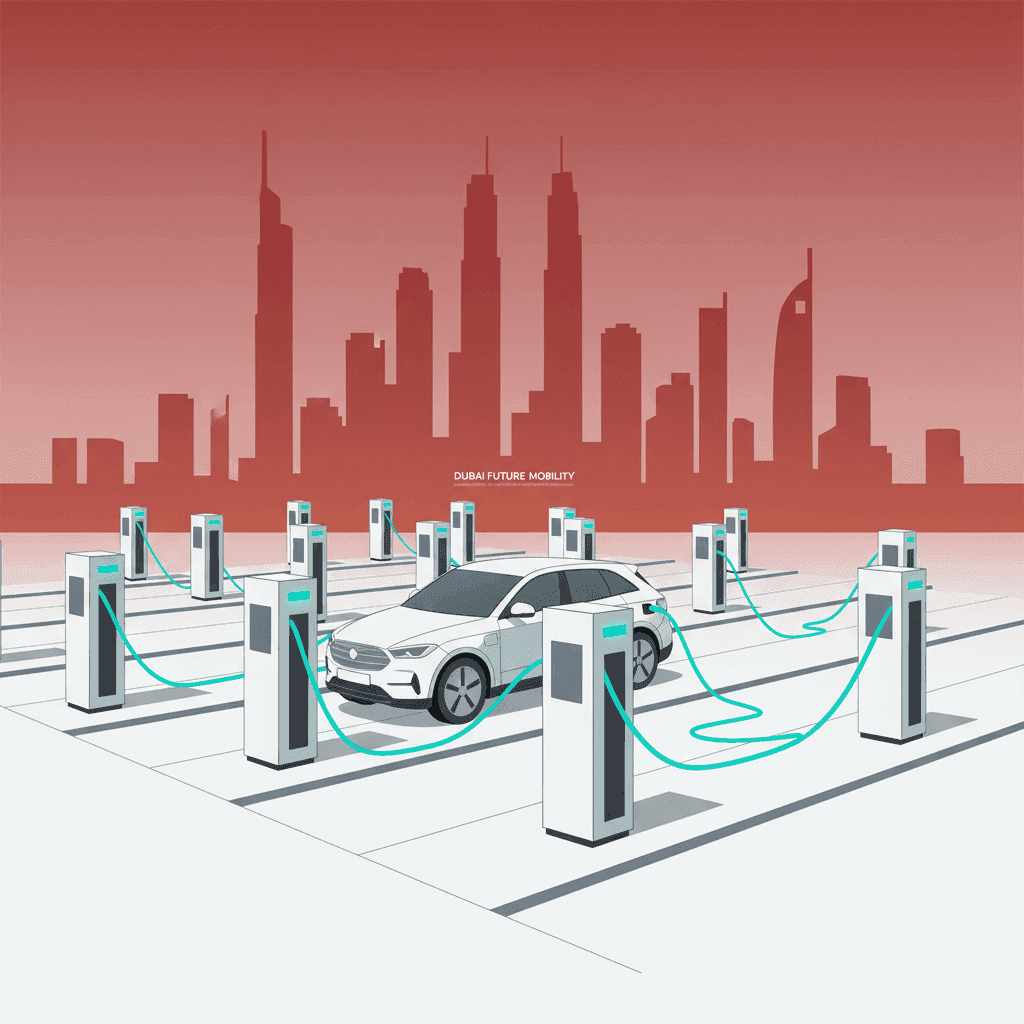
Charging an EV in Dubai is straightforward—and getting faster. Between the DEWA EV Green Charger network, chargers at malls and workplaces, and a wave of new ultra-fast hubs, you can plan daily top-ups and road-trip pit stops with confidence. Use this guide to find EV charging stations in Dubai, understand charger types and kW ratings, see how QR code payments and the DEWA Smart App work, and decide when home or workplace charging makes the most sense.
EV charging stations in Dubai at a glance
- Core network: DEWA EV Green Charger, launched in 2015.
- Scale: DEWA reports 300+ stations and 400+ dedicated chargers across the emirate, with capacity for about 740 vehicles simultaneously. Community sources tally 1,270+ public charging points serving 40,600+ EVs as the ecosystem grows.
- Coverage: Shopping malls, public offices, airports, petrol stations, highways, hotels, workplaces, residential communities, and even destinations such as Hatta.
- What’s new: Parkin and Charge&Go by e& are rolling out around 200 ultra-fast chargers citywide to bring sub-30-minute top-ups to neighborhoods, malls, and leisure hubs.
- Access: 24/7 public charging with multiple ways to start a session—DEWA Smart App, EV Green Charger Card, QR code, and guest charging.
Charger types, kW ratings, connectors, and when to use each
Dubai supports AC destination charging and DC fast/ultra-fast charging, plus home and workplace wall boxes. You’ll see a range of power levels; choose based on how long you plan to park and how quickly you need to leave.
| Charger type | Typical power (kW) | Connector | Where you’ll find it | What it’s best for |
|---|---|---|---|---|
| AC (Level 2) | 7, 11, 13–14, 22 | Type 2 (UAE standard for AC) | Homes, workplaces, malls, hotels, public car parks | Routine daily charging and longer stops; cost-predictable |
| DC fast | 20–40 (compact wall-mount), higher at major sites | Vehicle-specific DC connector | Petrol stations, transit hubs, key routes | Quick turnarounds; ~20–45 minutes for ~0–80% (vehicle-dependent) |
| DC ultra-fast | High-power (site-specific) | Vehicle-specific DC connector | Dedicated hubs, high-traffic destinations | Shortest stops—aiming for sub-30-minute top-ups |
| Wall box (residential/commercial) | 7–22 (AC) | Type 2 | Villas, apartment blocks, office car parks | Overnight/home charging, fleet depots, managed properties |
Where to find charging stations around Dubai
- Everyday destinations: Shopping malls, supermarkets, business districts, and hotels frequently host AC chargers for convenient top-ups while you shop or work.
- On the move: DC fast chargers at petrol stations, transit hubs, and along major corridors help you add range quickly en route.
- Residential & community hubs: Many newer communities and mixed-use developments include public or semi-public chargers in their parking facilities.
- Airports and leisure: DXB/DWC car parks, beaches, marinas, and leisure hubs typically offer a mix of AC and DC options.
- Further afield: You’ll find charge points in areas like Hatta, supporting weekend trips.
Note: Third-party maps sometimes show fewer stations than the official count. DEWA’s map and Smart App provide the most complete view of the EV Green Charger network.
How to locate EV charging stations (maps, apps, and in-car)
- DEWA Smart App & website (recommended): View the official EV Green Charger locations, live availability, connector types, and tariffs. Start/stop sessions directly in-app.
- Google Maps: Search “EV charging stations in Dubai” to navigate to nearby chargers, check photos, and read user reviews.
- Community maps: PlugShare, Chargemap, and Electromaps list public and semi-public chargepoints, check-ins, and tips. Handy complements, though not always exhaustive.
- In-car navigation: Many EVs surface compatible chargers, filter by power/connector, and route you with live status.
How to use DEWA EV Green Chargers (step-by-step)
- Park and confirm compatibility: Check the connector (Type 2 for AC; verify the DC connector your car uses) and the kW rating.
- Authenticate and start:
- Registered users: Tap your EV Green Charger Card (RFID keyfob) or use the DEWA Smart App to scan the charger’s QR code.
- Guest charging: Scan the on-unit QR code and follow the one-time payment flow—no prior registration required at participating stations.
- Plug in and monitor: Connect the cable (or your own at socketed posts). Confirm charging began in the app or on the screen. On many units, LEDs show status: green (ready), blue (charging), red (fault—use DEWA channels to report).
- End the session: Stop via the app or tap the card again, then unplug and stow the cable neatly for the next driver.
DEWA manages the network through a Charge Point Management System (CPMS) and supports 24/7 access across the city’s public EV charging network.
Payment, QR codes, and EV charging cost in Dubai
- Ways to pay: QR code on the unit (guest or registered), DEWA Smart App, or the EV Green Charger Card with consolidated billing.
- Tariffs: Most public chargers use a per-kWh rate that may vary by operator and by AC vs DC fast/ultra-fast. Overstay or parking fees can apply at some sites.
- Illustrative rates (subject to change): Historically, DEWA listed AED 0.29/kWh for registered users on public chargers in early phases. The UAE later outlined a national approach indicating slow charging around AED 0.70/kWh (+VAT) and fast charging around AED 1.20/kWh (+VAT). Always check the current tariff in the DEWA app or on the charger screen before you plug in.
- Example: A 75 kWh battery from 0–100% on fast charging at AED 1.20/kWh (excl. VAT) would be about AED 90; real costs vary by your starting state of charge, efficiency, and the live tariff.
- Free charging: Some hotels, malls, or workplaces offer free or validated charging for customers/tenants. Confirm on-site policies.
Home and workplace charging (wall boxes, 7–22 kW)
For daily mileage, AC charging where you live or work is the most convenient and predictable approach.
- Typical home setups: 7 kW single-phase wallbox for villas/townhouses; 11–22 kW three-phase where supply allows.
- Hardware features: Type 2 sockets, scheduled overnight charging, energy/load management, and access control (RFID/QR).
- Billing integration: Registered home chargers can be linked to your DEWA account so consumption appears on your utility bill.
- For property managers: AC chargers suit employee and visitor parking in offices, retail, hospitality, and residential towers. For high-turnover sites and fleets, add DC fast chargers (including compact 20–40 kW wall-mounted units or higher-power cabinets).
Practical tips for a smooth charging experience
- Match power to your stop: Use AC when you’re parked for hours; choose DC fast/ultra-fast when time is tight.
- Check live status: Use the DEWA app (or in-car/third-party maps) to avoid queues and out-of-service units.
- Know your connectors: AC Type 2 is standard across the UAE. Filter for your DC connector in the app.
- Be considerate: Move your car promptly after charging. Respect dwell limits and any parking rules.
- Verify tariffs: Rates can vary; confirm on the app or charger screen before you start a session.
EV charging map of Dubai: how to read it like a pro
When you open an EV charging stations in Dubai map—whether in the DEWA Smart App, Google Maps, or a community app—use filters to narrow down:
- Connector type: Select Type 2 for AC and the correct DC connector for your vehicle.
- Power (kW): Filter for 7/11/22 kW AC when you plan to stay longer, and for DC fast/ultra-fast when you need a quick turnaround.
- Station status: Prioritize live “available” points to minimize waiting.
- Amenities: Prefer sites with restrooms, food, and covered parking for a more comfortable stop.
- Policies: Check photos/reviews for notes on parking validation, dwell limits, and access hours.
FAQs about EV charging stations in Dubai
Where can I charge my electric car in Dubai?
Across DEWA EV Green Charger locations, malls, hotels, workplaces, petrol stations, airports, highways, and community hubs—including destinations such as Hatta.
How can I find the best charging point nearby?
Start with the DEWA Smart App for official availability and tariffs. Cross-check with Google Maps or community apps (PlugShare, Chargemap, Electromaps) for user photos and tips.
Are there free charging stations in Dubai?
Some sites (especially private locations like hotels or malls) may offer free or validated charging for customers or tenants. Most public charging is pay-as-you-go.
Can I find rapid or ultra-fast chargers?
Yes. DC fast chargers are common on major routes and at petrol stations. A new wave of ultra-fast hubs by Parkin and Charge&Go by e& is rolling out citywide for sub-30-minute stops.
How much does a charging session cost?
Public charging typically uses per-kWh pricing, with rates varying by operator and charger type (AC vs DC). Always check the live tariff in the DEWA app or on the charger screen.
How many EV charging stations are there in Dubai?
DEWA cites 300+ EV Green Charger stations and 400+ dedicated chargers, serving roughly 740 vehicles at once. Community maps may show fewer points at a given moment.
Do I need to register to charge?
No. You can use guest charging via QR code at participating stations. Registration adds convenience (RFID card, app control, consolidated billing).
What are common AC power levels?
7 kW at home, and 11–22 kW at many public/semi-public locations. Listings sometimes show 13–14 kW depending on hardware and supply.
How long to charge to 80%?
On DC fast/ultra-fast, many vehicles can reach ~80% in roughly 20–45 minutes, depending on charger power, battery size, and state of charge.
Choosing an EV‑friendly home or building in Dubai
- Dedicated EV bays: Look for buildings with allocated EV parking and visible Type 2 wall boxes (7–22 kW).
- Smart features: Access control (RFID/QR), load balancing, and scheduled overnight charging.
- Billing clarity: For apartments, check how charging costs are allocated—per kWh, RFID card, or app—and whether they’re integrated into DEWA billing.
- Guest/visitor charging: Useful for friends, short-stay tenants, and service providers.
- Future-proofing: Conduit capacity for more chargers, CPMS-ready infrastructure, and proximity to DC fast/ultra-fast hubs.
If you value effortless EV ownership, prioritize neighborhoods and developments with robust EV charging infrastructure—at home, at the office, and along your daily routes.
Key takeaways
- Start with the DEWA Smart App: It’s your authoritative EV charging stations in Dubai map—use it for locations, availability, connectors, and tariffs.
- Use AC for routine miles, DC for time-sensitive trips: Expect Type 2 AC across the city and a growing choice of DC fast/ultra-fast options.
- Payment is simple: QR code, app, or EV Green Charger Card. Guest charging is available at many stations.
- Networks are expanding: 300+ DEWA stations today, plus new ultra-fast hubs rolling out to cut stop times below 30 minutes.
Numbers and tariffs evolve quickly. For the latest DEWA EV Green Charger locations, features, and pricing, check the DEWA website and the DEWA Smart App before you drive.
Our Blog

Dubai Hills Estate Area Guide: Location, Lifestyle, Properties & Investment

Dubai Tram: Your Complete Guide to Route, Timings, Fares and Stations
Short term rental properties in Dubai: your complete guide to furnished, flexible stays (and smarter returns)
How to Get a Freelance Visa in Dubai (2025): Costs, Requirements, and Step-by-Step Guide